| Home | For sale | Site map | Contact information | Guest book | Lafette-menu |
 MG34
Lafette MG34
Lafette |
|---|
|
Markings The
markings on the Lafette 34 served several purposes. They help identify
the year it was made, the manufacturer and (most of the time) the
serial number it was
given by the manufacturer. In addition the WaA will tell us which WaA
inspector approved the finished product or sub-assembly. But
there are also markings to aid in the correct use of the Lafette, and
to aid in matching the right optics to the right Lafette.
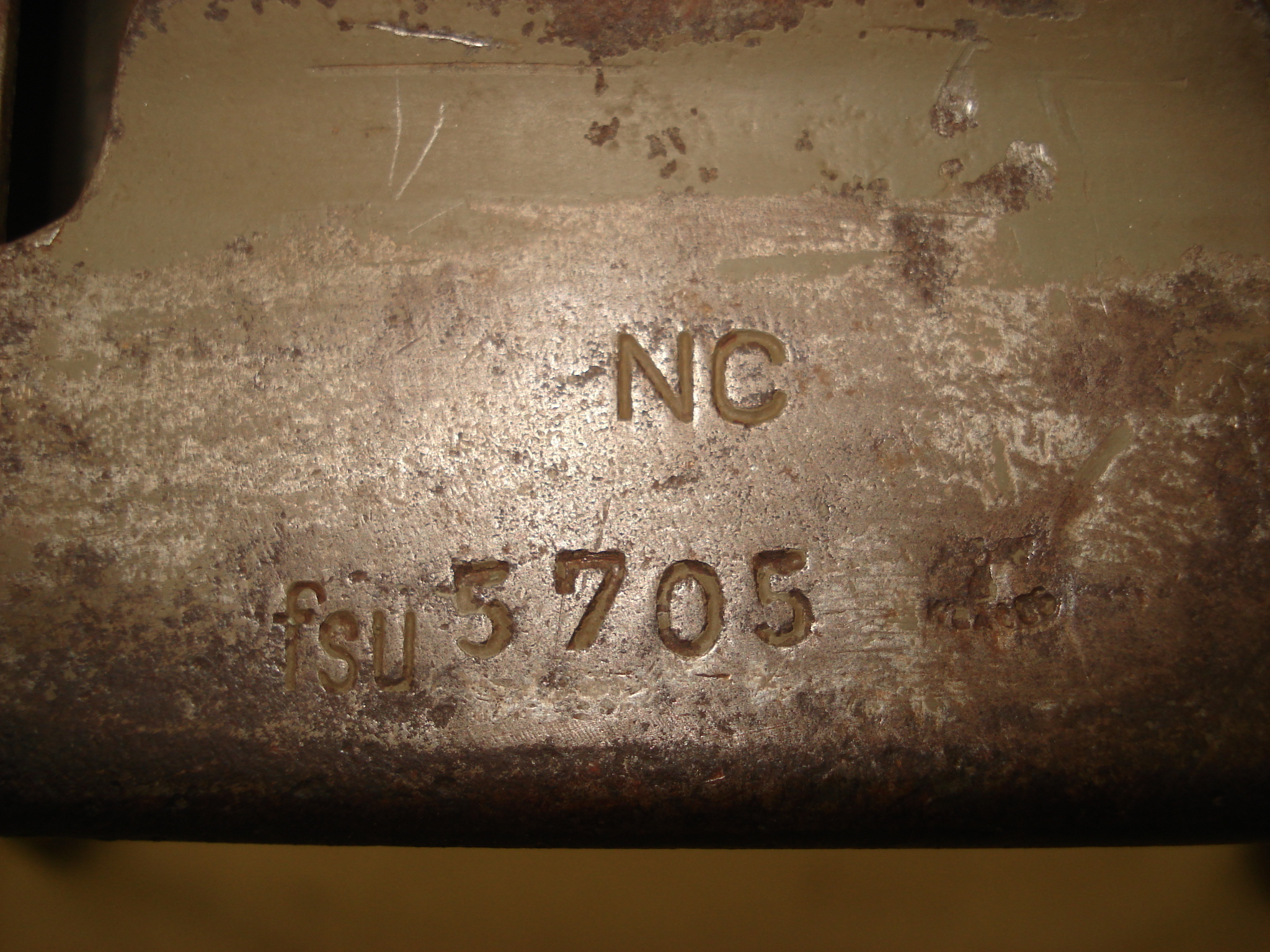
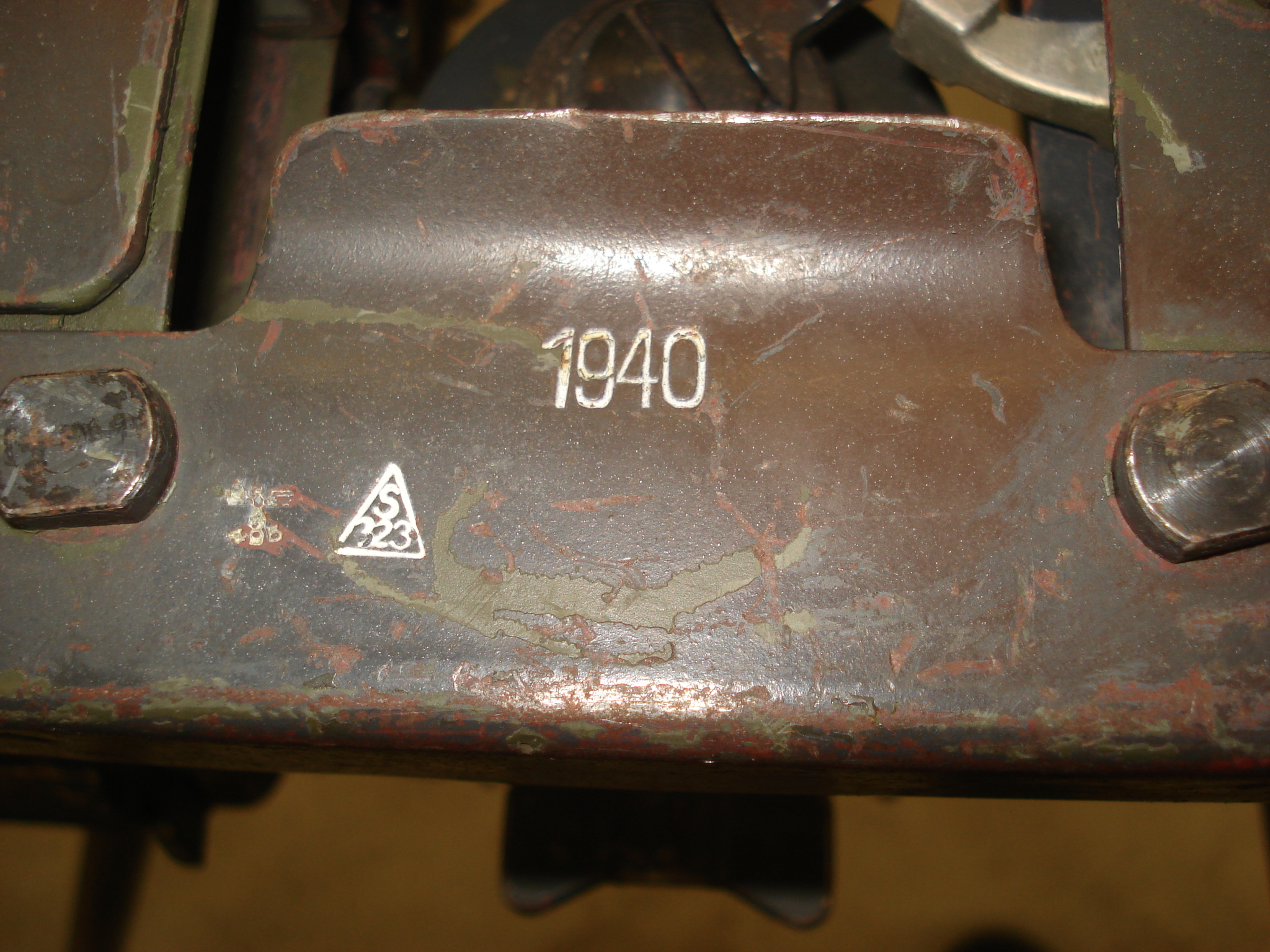
Main parts Let us start off with the main markings. The most interesting markings will be found on the rear cover. First of all we find the year of manufacture, on late war Lafettes replaced with a two-letter code (see below). Normally this is followed by a serial number and a letter. However, a series of Lafettes from fsu in 1940 have no serial number at all. 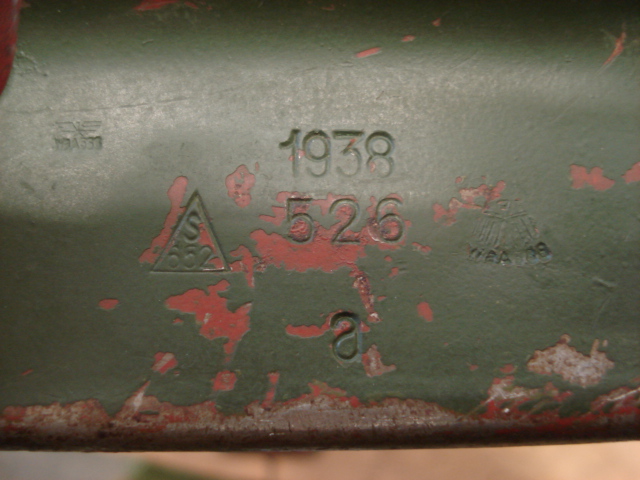 The most interesting marking is the maker's code or name. See the table below for further details. There will also be one or two WaA's. In the picture above the WaA on the right is an acceptance mark for the actual part, and the one in the upper left corner is an acceptance mark for the complete assembled Lafette. The second WaA was the first to be omitted. Of special note on the above picture is the fact that the "part-acceptance" stamp is a Reichswehr eagle, while the "assembled Lafette" stamp is of the Third Reich era. The markings on the rear lid are sometimes filled in with white paint (just like some gun collectors do with their guns to better study the markings). The sad thing about the rear cover is that it is the only place where you will find the serial number (with one small exception) and production year for the Lafette, as this part is easily replaced or removed! The recorded manufacturers of the Lafette includes
 The above photos show different manufacturer codes on Lafettes All of the main parts will bear a matching manufacturers code or logo and a WaA. On the front leg the markings will be found on the upper edge of the attachment ring, on the lower frame the markings will be found on the right side of the bracket attaching the front leg.The cradle only have a WaA on the welded on bracket for the optic mount. 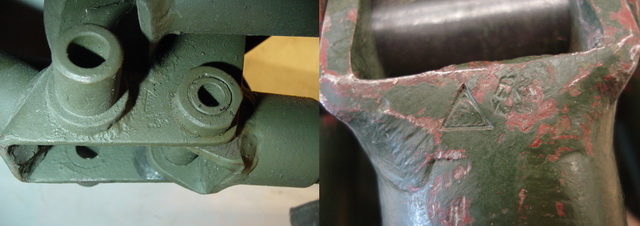 These photos show the normal position of markings on the main frame and front leg. Note the repainted finish on the left picture. Search-fire mechanism When it comes to matching makers mark there is always one exception; the search-fire mechanism. It was not manufactured by the Lafette-maker at all by default, but by a sub-manufacturer. As a consequence the mechanism is marked with the sub-manufacturers code (or logo), date of manufacture and serial number. Apart from the fact that the year of production should be the same or at the worst differ from the Lafette’s year of production by one year more or less to allow for early/late year deliveries from the sub-manufacturer, the information on the search-fire mechanism stands “on its own”. The serial number will of course never match the one on the Lafette. There is one exception from this rule though. During the last year of production of the Lafette 42 dar must have run out of sub-manufacturers for the search-fire mechanism. Several late-war mechanisms have been observed with no serial number, and they are simply marked dar, like the Lafette 42 they sit on. These search-fire mechanisms are most of the time left unpainted. 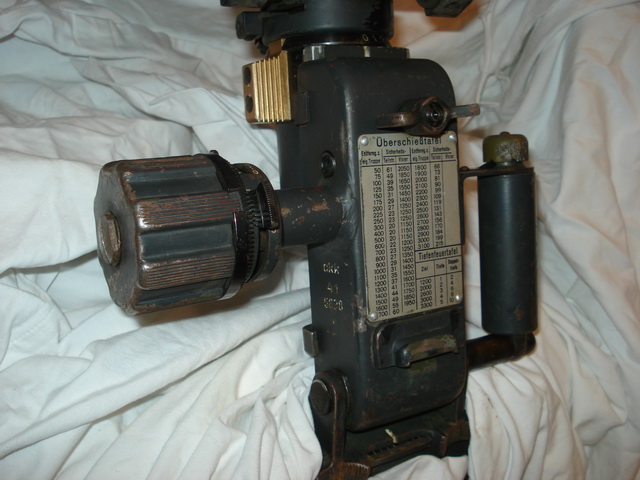 The recorded manufacturers of the search-fire mechanisms includes
 The above photos show different manufacturer codes on search-fire mechanics The new date-marking
The dating of the Lafettes and the search-fire mechanisms was normally done with four digits on the early examples and then two digits on the mid-war ones. In 1943 this system was gradually replaced with a new coding system. The only other item I know of that used this system was the MG42, which was de-coded by Myrvang in his book, "MG34-MG42, German universal Machineguns". The system consists of two upper case letters, special to each manufacturer and product type. Due to this some manufacturers discontinued to use their own three-letter code. 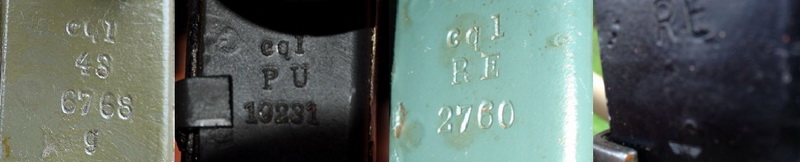 The search-fire mechanism from Klüssendorf. In 1943 the year-digits (43) got replaced with the letters PU. In 1944 the letters were changed to RE. Late in 1944 cql dropped their code and continued only wth the marking RE, which then defined both the factory (cql) and the year of production (1944). The following list identifies the two-letter codes encountered so far. The connection with the maker is proven, the year of manufacture is "assumed" (with some certainties) based on studies of surviving examples.
The search-fire traverse arch As mentioned above there is one other place where the serial number of the Lafette can be found; the left end of the search-fire traverse arch. On two Lafettes I have studied the serial number has been manually replicated in this position. A study of the marking clearly shows that this has been applied by hand, most probably by a Waffenmeister. 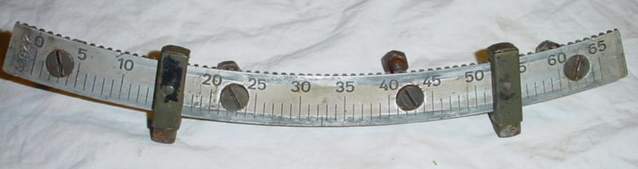 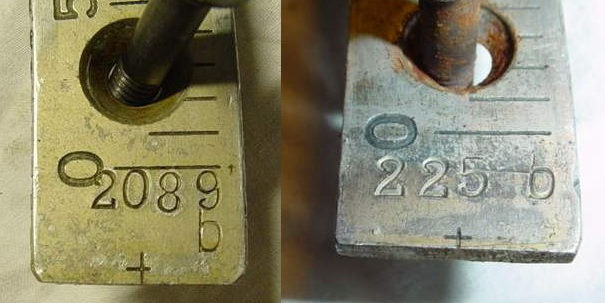 The use of the dividing lines 0-65 will be covered in the "Direct and indirect fire" article once it is ready. Assorted small parts and the use of the WaA marking On the early Lafette almost every single tiny piece was approved by the WaA inspectors with their stamps. 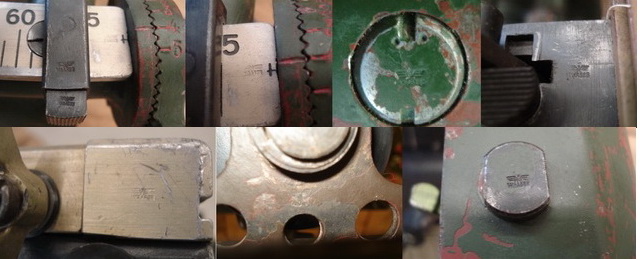 Later in the war the number of WaA-stamped parts diminishes as the need for faster production increases. By 1943 the rigid system of approving each and every part has come to an end, as only selected parts and the final product get the WaA stamp. The WaA stamp is purely a sign of acceptance; that the part has passed the quality inspection. It is not a property marking. 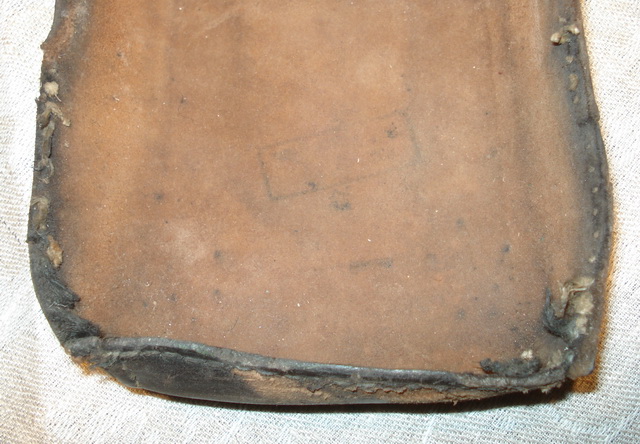 The picture above shows the inside of a leather pad from an early Lafette. It has indeed been WaA-stamped in ink before it was attached, which means that the actual pre-cut piece of leather was approved prior to the stitching. Assorted markings In addition to the different markings already described in the text above, there are other types of markings; each serving its own purpose. 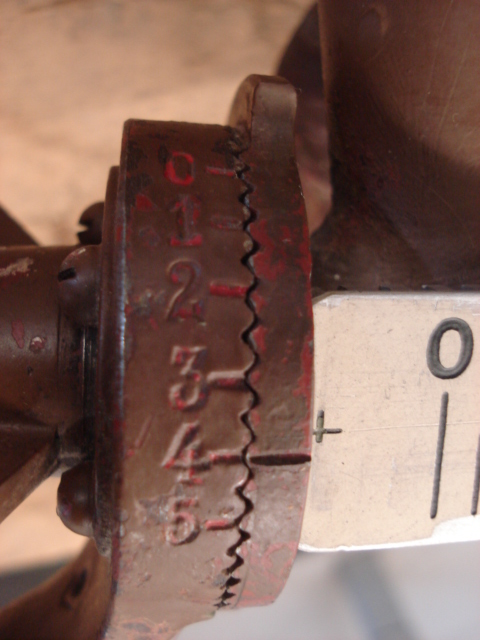 The rear legs have a scale that makes it easy to set the legs in a designated position. On this early Lafette the numbers and alignment marks have been inlaid with red paint. Later versions have white paint to better enable the crew to see the numbers. 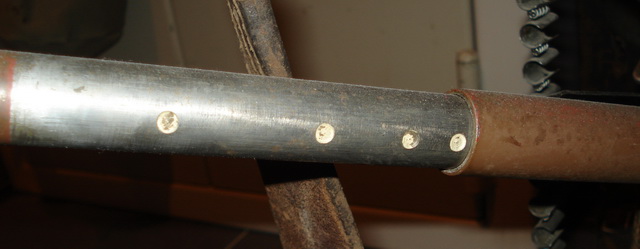 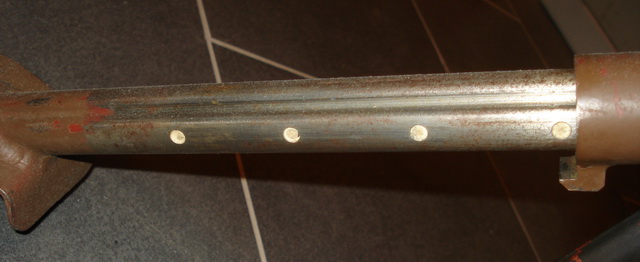 Both the front leg and its support bar have white inlaid dots on the surface opposite the locking holes, to enable the crew to set up the leg in a pre-ordered position. 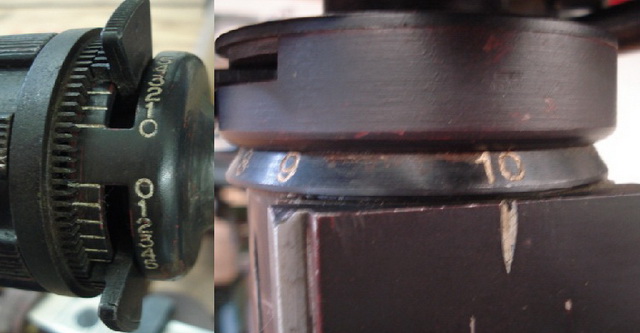 The search-fire mechanism has white inlaid numbers and alignment marks on the preset positions. 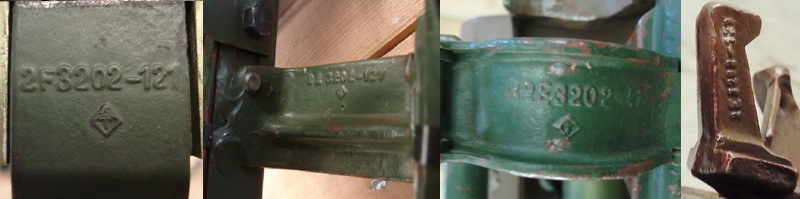 Early production Lafettes have some casted parts that display the individual part's stock number. The German war-industry seldom marked their parts with stock or part numbers, but on the early Lafette there are some examples of this practice Field-applied markings Some Lafettes will also have a serial number painted or stamped somewhere on the sleigh, usually on the rear of the lid, but also found on some of the sides at the top of the sleigh. These numbers can be found in white, yellow or red paint, or just stamped directly into the metal. The numbers are the serial number of the specific optical sight assigned to this Lafette. This subject will be covered more extensively in the article about "Direct and indirect fire" once it is ready. The optical sight is fastened to the Lafette by the optical sight holder. This holder can be adjusted so that the sight and the gun mounts are in alignment. Due to this it is crucial that the correct sight is used with the correct Lafette. 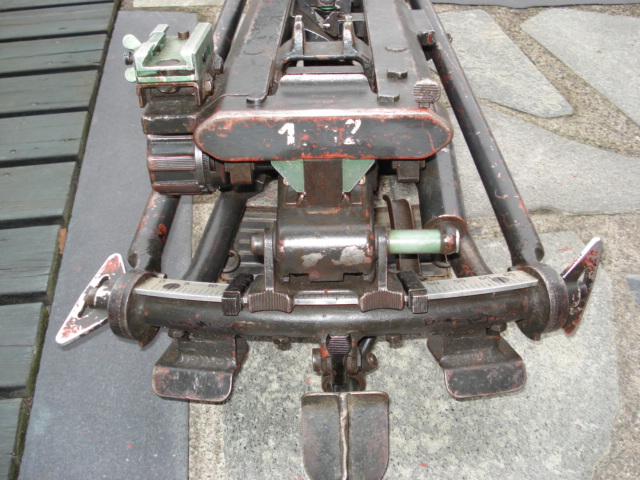 The standard position of the marking of the optical sights serial number is the rear of the cover, as shown above 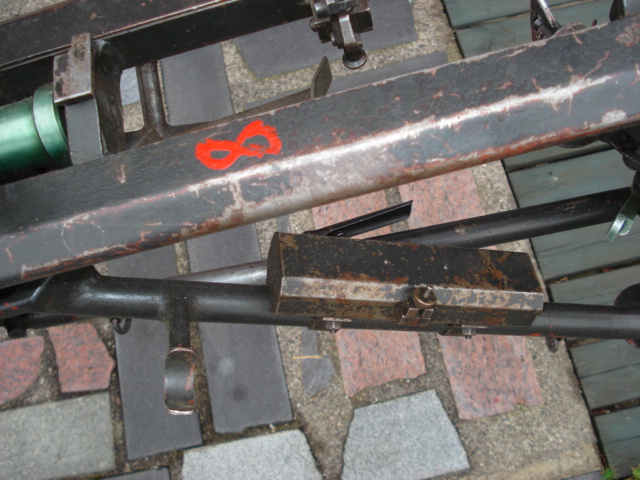 The Lafette above has also got a red "8" painted on, I am guessing it was for unit identification. 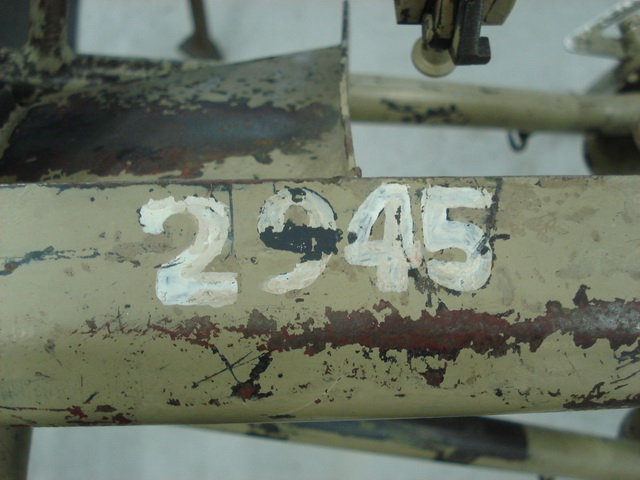 An alternative position often used is the left frame, but not very good as the cartridge belt would be gnawing the paint away 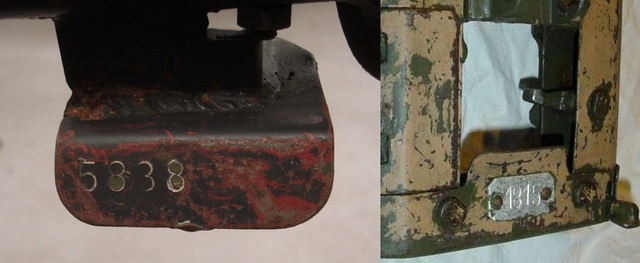 Two alternative ways of marking the Lafette with the correct sight number On the left picture above the serial number has been stamped directly into the rear face of the left support foot. The stamped number has been inlaid with white paint to make it easier to see. On the right picture the serial number has been put on a metal plate that has been riveted to the rear cover. Not to be confused with the larger metal plate found on Yugoslavian reworked Lafettes that has been riveted in the same position with 4 rivets! 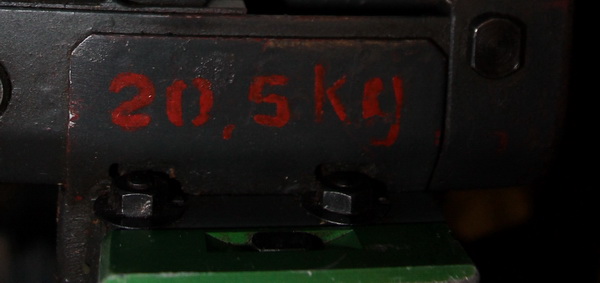 This ecy Lafette 34 from 1942 has received an additional warning in red paint. 20,5 Kg refers to the actual weight of the Lafette and must have been added as a warning. 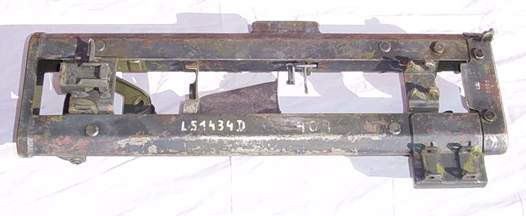 Unfortunately, I have no better picture of this gem. It was rebuilt for the MG3 by the Norwegian army, but still retained some valuable markings once the OD was washed off. Note the serial number for the optical sight, almost unreadable (409?) on the left frame opposite the trigger actuator. The most fascinating thing about this Lafette frame is that the Feldpostnummer was painted on; L51434D. Feldpostnummer 51434 belonged to "Stab III u. 9.-12. Kompanie, Luftwaffen-Jäger-Regiment 27" (2.1.1940-11.3.1943). Set up in Norway from the Flieger-Regiment 61 for Luftwaffe Field Division 14. The "L" in front denotes a Luftwaffe unit, and the "D" at the end is the sub-unit. Fake markings Oh yeah. They are here as well! A standard German Lafette 34 or 42 will have sufficient markings to make it a "selling item", so a original Lafette seldom receives any extra markings to "beef it up" to make those extra bucks (I still haven't seen that dreaded fantasy SS Lafette yet, but the first SS MG42's are out there already). But the Yugoslavians manufactured a copy of the Lafette 42 for their own production of the MG42; the MG53. No idea what the correct name for this Lafette is, but I will until further notice call it the "Lafette 53" (although it clearly isn't a German manufactured item and of course should not be called a Lafette at all!). The "Lafette 53" has been around for many years, but is easy to tell apart from the Lafette 42 as it carries almost no markings at all. But with prices raising for the Lafette 42 it was just a matter of time before someone was starting to mark the "Lafette 53" to fool unexperienced collectors! I found this "Lafette 53" on Ebay, and it sure has been humped badly! 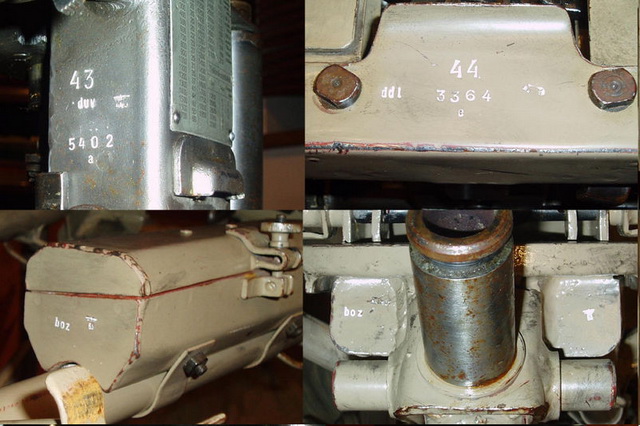 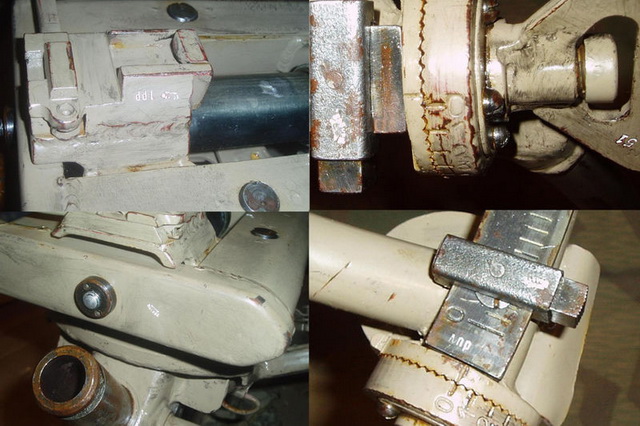 First
of all; this IS a Yugo "Lafette 53", and absolutely NOT a Lafette 42.
The two upper pictures are not that bad, as the faker has found the
correct spot for the markings. But unfortunately NONE of the markings
look good, and most of them are pure fantasy (code/WaA). For the next 6
pictures absolutely everything went wrong. None of these markings are
in the correct spot or ever appeared like this on a Lafette 42. The
paintwork on this one will be discussed in the article about paint.
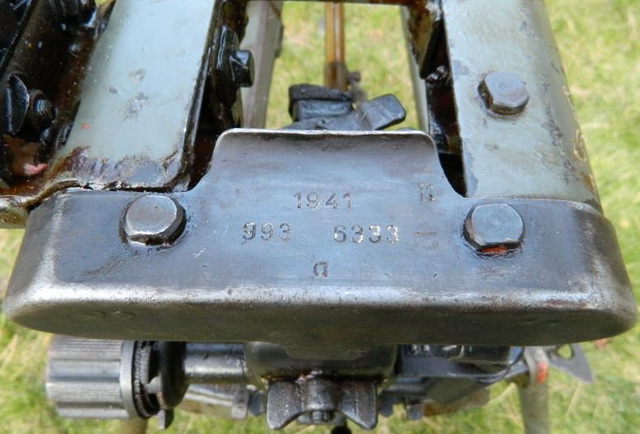 Another "Lafette 53" sold on Ebay. Once again the markings are pure fantasy and badly composed. 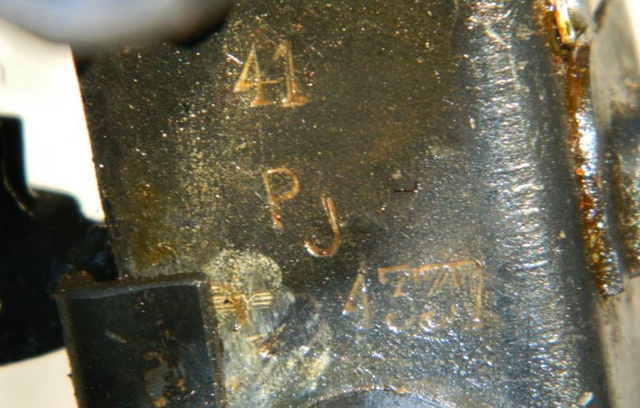 The fake markings on the search-fire for the Lafette 53 above. Even though I haven't taken the blue pill yet I think I can foresee that there will be a lot of this in the future to come.  Time for a
rest. I will get on my feet again soon and present you with more
Lafette facts.... |
| Home | For sale | Site map | Contact information | Guest book | Lafette-menu |